

Attention Spans Aren't Shrinking
Attention researchers don't think attention is in decline

Are our attention spans getting shorter? Certainly many people seem to think so. A UK survey found 49% of people think their attention span is shorter than it used to be (only 25% thought it was not). The headlines seem to agree: “TikToks, Shorts, and Reels Are Melting Your Attention Span, Study Finds”, claims a recent headline from Vice. “SHORT-FORM VIDEO IS REWIRING OUR BRAINS — AND THE DAMAGE IS WORSE THAN YOU THINK”, another article says.
The claims aren’t particularly new. In 2015, a Time article claimed “You Now Have a Shorter Attention Span Than a Goldfish”.
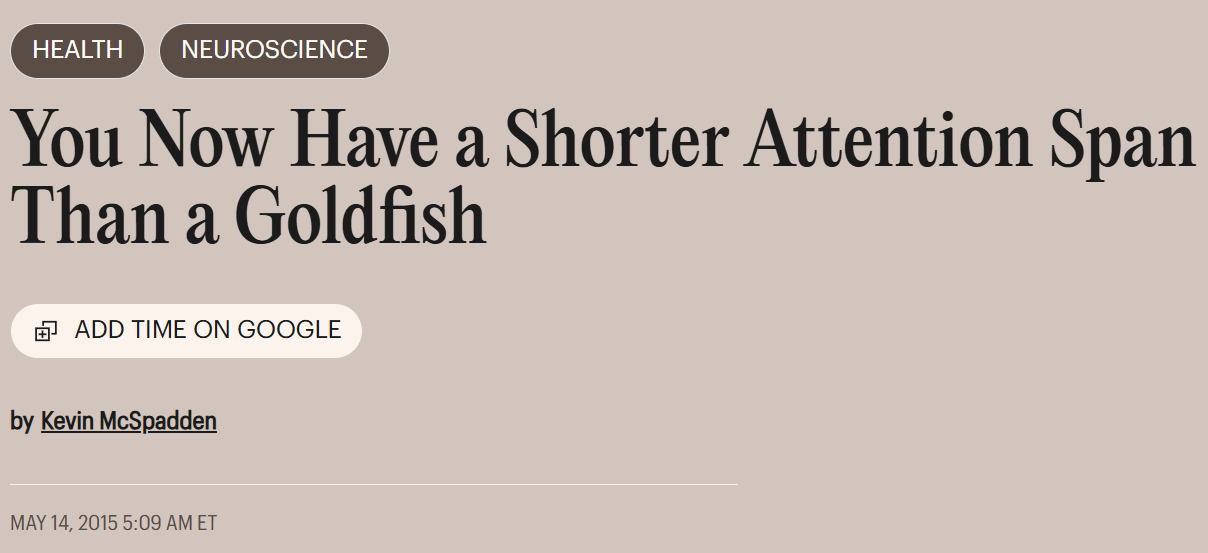
It’s a common belief that modern social media, short form content, and general “brain rot” of the modern age has led to the modern day populace being unable to pay attention. Yet if you talk to attention researchers, you get a different picture.
When asked if attentional skills have declined, Edward Vogel, professor of psychology and neuroscience at the University of Chicago, said: “I’ve been measuring college students for the past 20 years. It’s been remarkably stable across decades.”
The article quoting Vogen goes on:
His findings echo those of other experts, including Michael Posner, a psychologist known for identifying the brain networks underlying attention, and Marcus Raichle, a neurologist and authority on brain metabolism. They say the ability of healthy adults to pay attention hasn’t diminished.
“There is no real evidence that it’s changed since it was first reported in the late 1800s,” Dr. Posner said.
Similarly, in his book about screentime, Unlocked, psychology professor Pete Etchells asks two researchers whether they’ve seen any evidence of declining attention. Jacob Fisher says “I’ve yet to see anything that’s actually convincing.” Chris Chambers goes further:
It would be obvious if there was a decline. It would be easy to look at the last, say, fifteen years of research on attentional cueing and look at whether reorientation costs are getting higher. My virtually certain prediction is that you would get no effect whatsoever.
In fact, when I looked into it, the only study I could find that attempted what Chambers is describing found a modest increase in attention/concentration ability (more on that below).
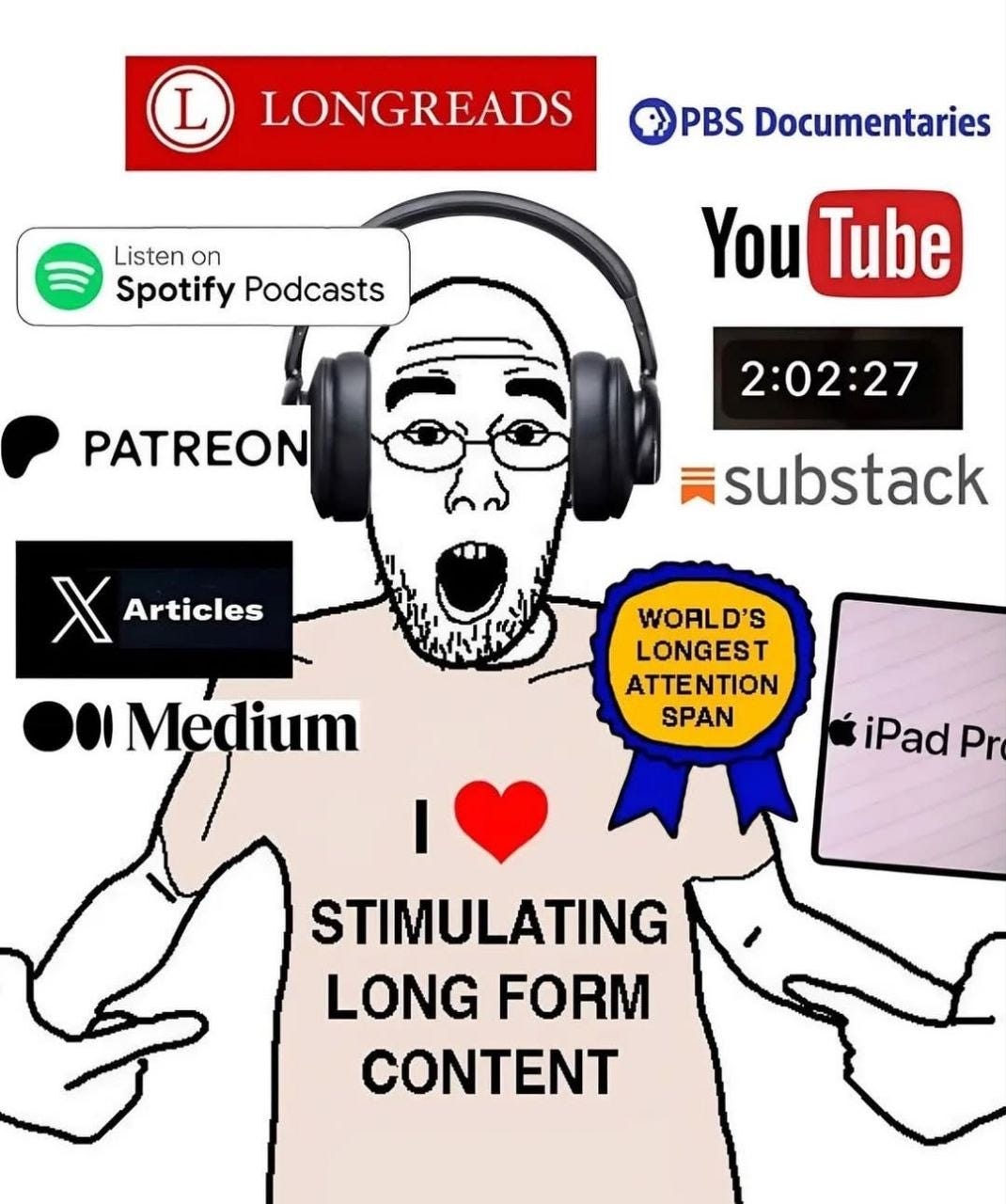
Why might there be such a discrepancy between the general public’s perception of a decline in attention, and the researchers that study it? A clue comes from this article that quotes Gemma Briggs, yet another attention researcher who doesn’t think there’s a decline:
In fact, [attention researchers] think the idea that attention spans are getting shorter is plain wrong.
“I don’t think that’s true at all,” says Dr Gemma Briggs, a psychology lecturer at the Open University.
She studies attention in drivers and witnesses to crime and says the idea of an “average attention span” is pretty meaningless. “It’s very much task-dependent. How much attention we apply to a task will vary depending on what the task demand is.”
Briggs’s quote indicates the importance of what it is we’re doing. “Attention span” isn’t some simple quantifiable ability, it depends on “the task demand”. What it is we’re doing and the environment we’re doing it in affect how long we pay attention to it.
It’s possible we’re correctly inferring that it’s harder to pay attention for longer, but incorrect in attributing it to our diminished abilities. It might be that we have more vying for our attention.
We’ll come back to that. But first, let’s talk about the headlines pinning the blame here on our cognitive capacities being diminished due to phones and social media. With basically every news headline you see talking about a new study showing how scrambled our brains are, there are only two things you need to know to assess whether there’s anything to the study: short-term effects are not lasting deficits, and correlation is not causation.
Short-Term Effects Are Not Lasting Deficits
Let’s look again at the Vice article I mentioned above: “TikToks, Shorts, and Reels Are Melting Your Attention Span, Study Finds”.
Sometimes you find articles where the headline is a bit over the top, but the substance of the article is much more even-keeled. This Vice article is not one of them. Here are a few choice quotes from the article:
It turns out “brain rot” isn’t just a cute little term to describe the current state of the internet.
Short-Form Video Is Wrecking Your Memory and Focus
short-form video, as a format, is essentially a less elegant version of the memory-wiping Neuralyzer from Men in Black
This is all bizarre if you actually read the two studies it’s based on.
The researchers had people perform a simple task: press ‘M’ on a keyboard if a nonword (like “batly”) is displayed, and press ‘N’ if a real word is displayed. Then, occasionally (about 1 in every 10 trials), the word “blue”, “purple”, or “green” would appear, and each of those words required pressing a different key (’Q’, ‘W’, and ‘E’). Participants did this for hundreds of trials, trying to respond quickly each time.
Participants did this task for a little while, and then were given a 10 minute break where they either scrolled their TikTok (or other short form video) feed, or did something else (watched a longer video, rested, scrolled Twitter, etc).
What they found is that people who viewed TikTok during the break tended to perform worse on the occasional color word test (but did fine on the real word versus nonword test). They put this down to the rapid context switching involved in short form videos disrupting “prospective memory”. That just means they forgot that they were supposed to do something different for color words, or forgot which button they were supposed to press for which color.
This doesn’t seem terribly surprising to me. Rapid context switching makes it hard to remember things. I experience this every morning when I’m trying to get my kids’ stuff ready for preschool and they stop me every 30 seconds to ask me to get them milk or to look at how high they can jump. When I return to getting their lunches together, I’ve totally forgotten what I was going to do next in the process.
Not to say there’s nothing we can take away from this research. It’s probably useful to know that, if you’re taking a break from work, scrolling TikTok might not be your best choice. You might go back to work more scattered than you would be if you took a walk, talked to someone, or watched one thing instead of 20 different short videos. But this is completely different from showing some form of lasting cognitive harm.
I’m going through these studies as one example, but this type of research—showing exposure to screens/social media/short form videos has some immediate deleterious effect on some cognitive skill—is common. The experiments are easy to run and they tend to get a ton of media attention. Another recent one had people watch TikTok videos and then read a news article, and found people who watched TikTok paid less attention to the news article. Watching short term videos may have a bit of inertia, putting you in a state where there’s a mismatch with the slower pace of reading, but again, this is very different from a permanent impact on cognition.
This stuff is useful to know. If you are in the middle of doing something hard, and take a break with TikTok, there’s a good chance it’ll be hard for you to get back on track afterwards. But that isn’t evidence that using TikTok negatively impacts your ability to pay attention in a lasting way.
Correlation is not Causation
“Correlation is not causation” has become a cliche, but it seems it needs to be said more often because the media has not learned it.
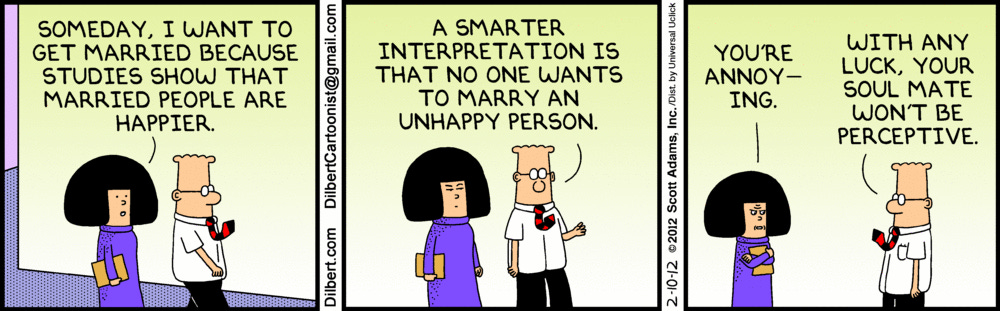
I would wager that most headlines you read claiming that social media is reducing our ability to pay attention are conflating correlation and causation. Typically if you look at the studies, they will say there is an “association” or “correlation”.
Take this one: “TikTok scrolling can cause ‘brain rot’ according to new American Psychological Association study”. Notice the explicit use of the word “cause”. This is in direct contradiction of the academic paper itself, which says “most included studies were cross-sectional and correlational, the findings of this review cannot confirm directionality”. In other words, it’s correlation, not causation.
There’s similarly been much ado about studies showing an association between brain volume and short form videos. Again, these are correlational. In the words of psychology professor Pete Etchell:
“[From this study] you can’t say anything about whether watching short videos causes changes in the brain, or whether certain types of brain structure precede certain types of video consumption.”
This is the key problem with interpreting any correlation. Are those with pre-existing attentional problems more drawn to TikTok? Probably. Are there brain differences between those with attentional problems and those without? Probably. So finding a correlation between social media usage and attentional problems or brain differences doesn’t tell you the social media usage caused the problems.
Of course, something doesn’t need to establish causality to cause us worry. But when we take a step back and look at the broader picture, I think it’s fair to say the concerns are overblown. In general, the association (again, correlation, not causation) between social media usage and cognitive effects are pretty small and inconsistent—certainly not large enough to justify the “brain rot” rhetoric you frequently see.
Combined with attention researchers saying measures of attentional ability have remained stable, there isn’t much reason to worry. But that hasn’t stopped certain sensational claims about our vanishing attention spans.
Are Our Attention Spans Shorter Than Goldfish?
About ten years ago, a slew of articles from major outlets—Time, The Guardian, Telegraph, USA Today, National Post, and the New York Times—claimed that our attention spans have shrunken to 8 seconds long (shorter, it is claimed, than a goldfish).
In this case, it isn’t an exaggeration of some published research. It’s actually not clear where the number comes from. Journalist Simon Maybin traced it to a report from a Microsoft team, which cites a company called Statistic Brain, which cites the US National Library of Medicine and the Associated Press. When contacted, none of these organizations could find any record of research that backs up those numbers. It’s totally unclear where that number comes from.
There is, however, some real research that seems to tell a similar story. Gloria Mark has done studies looking at how long people stay on one task in the workplace. She performed a few different studies over the years, and makes statements about how in 2003 the attention span was 2.5 minutes, in 2012 it was 75 seconds, and in 2016 it was around 40 seconds (and seems to have leveled off).
She is talking about three studies, and there isn’t a problem with any individual one. But the problem is comparing across them. For one thing, they use radically different measures—in the 2003 study, a person sat with a stopwatch and tracked when a person “changed task”, but the 2012 and 2016 studies use a computer logging measure that tracks when someone changes the window currently in focus.
As I write this, I am switching back and forth frequently between multiple windows. I have one window where I am typing up this document, and another with a few tabs with some of the research I’m talking about. I’m flipping back and forth between them whenever I reach a point where I need to consult a detail in the research. This is similar to when I’m programming, and rapidly switch back and forth between documentation, a window testing what I’m coding, and the window where I’m writing the code. Each switch would be considered task switching by the measure of Mark’s later studies, even though I’m on the same task with each switch.
In the first study done with a stopwatch, all of these window switches may have been considered the same task. Or maybe computer window switching has become more common as the nature of work has changed over time, and now often involves multiple applications.
These studies were also done in different companies with different people (they’re all small samples, with 13, 14, and 40 people in the three studies), so the differences might also just be due to differences in the workflows in those companies or with those people.
The point is, comparing the numbers just isn’t meaningful. We don’t know what’s caused it, and it certainly doesn’t say anything about attention spans. But that hasn’t stopped Mark from making sensationalized claims and writing a book about it.
The Case Against Rotting Brains
The problem with writing an article like this, where there’s a bunch of stuff to debunk, is that I’ve spent a huge chunk of this article giving examples that go against my thesis (which is that attention spans haven’t shrunk) and arguing it’s weak evidence. You might agree no individual study is perfect, but still think the overall weight of evidence—and your experiences from your own life—is in favor of shortened attention spans.
I often hear about other supposed indications that our attention spans have dwindled—fewer people reading for pleasure, or the fact that people spend time watching short videos on TikTok itself as an indication of our reduced ability to pay attention. But we can also point to other forms of sustained attention—movies have gotten longer, and binge-watching shows has become commonplace. Long “video essays” on Youtube and other streaming platforms are increasingly popular among Gen Z. If you go looking for indications in either direction, it’s easy for confirmation bias to serve up a few examples where we spend more or less time paying attention to specific things.

It’s much better to look at actual studies instead of trying to draw inferences from trends in media. The technology and media landscape have changed. We should be looking for some longitudinal change in something that actually measures our ability to pay attention.
This takes us back to the quotes from various attention researchers we started with, saying they haven’t seen a change in attention measures in the decades they’ve been studying it and would be very surprised to see some.
The only study that I’ve found that directly compares attentional ability across time actually found that concentration performance in adults has increased from 1990-2021. They call this the “Flynn effect for attention” — the Flynn effect being the noted increase in IQ across time. People are getting smarter, and apparently, getting better at concentrating.
Now, to be clear, that is one review, looking at one particular operationalization of attention (the d2 test of attention). I don’t think we should go around claiming attention has been getting better based on this single study, but I do think it represents the best test of what we actually want to know when we ask if our ability to pay attention has changed over time.
Given how easy it would be to find longitudinal differences, and how eager people are to find declines that all the big news organizations will parrot made-up numbers without checking them (as shown by the “goldfish” stat mentioned above), the fact that we don’t have anything close to a knock-down study says something. I think we can be pretty confident that our ability to pay attention has not decreased.
Why Does It Feel Like Attention Spans Are Shortening?
As mentioned in the intro, about half of people think their attention has gotten shorter. The term “brain rot” has gained popularity for a reason. There is certainly a perception that phones have wrecked our brains and made it harder to concentrate.
But I think there’s a simpler, more likely explanation that makes sense of this association that many people have about phones taking away our ability to concentrate. Any moment of boredom I feel, I can whip out my phone and start scrolling social media. There’s no friction. 25 years ago, this wasn’t an option.
Phones make attention-wandering both easier and more visible than they used to be. If you’re at dinner and your partner pulls out their phone, you know they aren’t paying attention in a way that’s much easier to tell than if their mind just started wandering. Almost every time I procrastinate, it’s by looking at my phone. It would be easy for me to conclude that the reason I have trouble doing anything hard is because my phone has reduced my ability to concentrate on what I’m doing.
I certainly don’t want anyone to take this article to mean “no one actually has a problem with phones or social media”. It’s worth being mindful about what role these apps play in our lives, and if we’re having trouble with procrastination because of them, we can take steps to mitigate that. But there’s a big difference between a drop in our cognitive abilities and there being something distracting in our pocket.
We have control over our environment, especially over our phones. We can use them mindfully, gaining the things we like about phones (keeping connected socially, staying informed about things we care about, easy entertainment when waiting at the doctor). Or you can leave all notifications on and let it distract you every 5 minutes while you’re trying to get work done.
We have control here. Our brains haven’t rotted, and that’s good news. If you feel like you’re easily distracted and want to concentrate more, there’s no need to go to the extreme of swearing off all phone use. Just add friction to using it when you want to concentrate. Put it in another room, put it on Do Not Disturb mode, install an app that helps you manage usage.
You have control, your brain isn’t rotted.
If you enjoyed this, please hit the “Like” ❤️ button, restack, or share this article to help others find it.
If you enjoy Cognitive Wonderland, consider supporting it by becoming a paid subscriber at whatever level feels comfortable for you.
If you’re a Substack writer and have been enjoying Cognitive Wonderland, consider adding it to your recommendations. I really appreciate the support.
Before social media, I spent countless hours on Napster/ Limewire trying to memorize Biggy songs. My cognitive flexibility/task-switching skills were absolutely taxed in terms of me switching between homework and rapping lol.
I'm 83. A lot of what I do these days is made up of small, short, essentially meaningless tasks that constitute normal daily life. I lose patience with the day to day tasks of elderly life. Even getting dressed in the morning takes longer because my knees no longer bend as easily as they did 20 years ago. Taking a bunch of medications delays the process by maybe 5-10 minutes. Can't not do that and can't forget to do that. I need to wear compression socks because of vein problems. Ever tried to put those suckers on? Another 10+ minutes sucked up out of the start to my day. The list is endless. What used to take 15 minutes now takes 2 hours start of finish. And then I bitch at myself about not getting enough done during the day. Is my attention span shorter? Yeah, it is. All because it needs to be when every act seems to no longer be automatic. I don't even own a smart phone so I'm not distracted by scrolling. I am distracted by trying to get this aging body through the day.